About Learn By Hand
The foundation of all learning is reading, writing, and arithmetic, practiced by hand, on paper, with a pencil. If a child can read with comprehension, write clearly, and work through math problems, they have a foundation that allows them to learn anything. These are the traditions that make us human.
About the site
Learn By Hand is a free library of printable worksheet generators for reading, writing, and math. Every worksheet is designed for 8.5 by 11 paper, and every generator produces fresh problems each time. The screen is the parent's or teacher's tool for making the worksheet. The paper is the child's tool for learning.
The research behind this approach is clear and growing. Handwriting activates neural pathways for learning, memory, and comprehension that typing and tapping do not. Children taught to read and write by hand retain more and focus longer than screen-trained peers. Most of the gamified learning apps on the market are engineered for engagement, not retention. This site is engineered for the opposite.
Our principles
- Free forever. The worksheet generators will always be free, with no account and no paywall.
- Paper first. Every worksheet is designed to be printed and completed by hand.
- Research grounded. We link to the peer-reviewed studies behind our approach.
- Teacher quality. Printed output should look professional, not like a cheap handout.
- AI is for professionals, not students. AI amplifies what a literate adult can do. For a student still building those foundations, it short-circuits the learning itself. The adult uses AI. The student uses a pencil.
Who is behind this
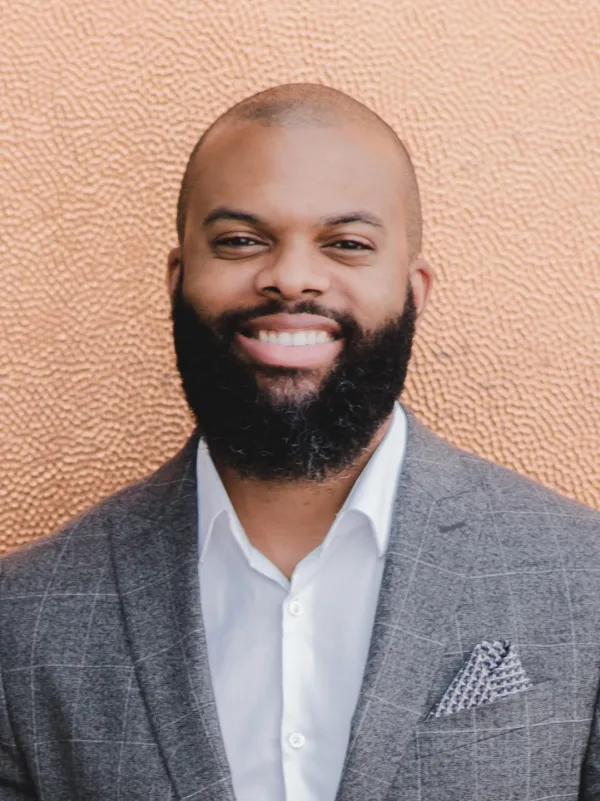
I'm David Ovienmhada: husband, father of five, software engineer, homeschooling parent, and founder of an engineering firm called Aeeiee (pronounced "AI"). Learn By Hand began as a project for my own children and has grown into a free public resource that Aeeiee now builds and runs. The site lives on the company's cloud infrastructure, members of my team contribute to the code, and Aeeiee covers the operating costs. That backing is what keeps the site free.
This started in my own home. I began using AI to make worksheets tailored to whichever concepts my children were struggling with. Finding the right ones online was tedious, and writing my own generators in code had always been more work than I had time for, until AI made it fast. The forgetting stopped. The mastery stuck. Eventually it seemed worth sharing.
In our house, the kids complete four or five worksheets a day before they earn screen time (video games, iPad, whatever the privilege of the week is). Any homeschooling parent will recognize the system. Paper first, then screens.
There is a bigger reason I care about this. My children will reach college in a world I cannot fully predict. AI is reshaping what work looks like, what education is worth, and what skills will matter. Screens are everywhere, and there is growing evidence that they are changing how children's brains develop, not always for the better. Nicholas Carr's The Shallows makes this case more carefully than I can, and it is worth reading. In the middle of that uncertainty, one thing still seems solid to me: literacy. The ability to read, write, and work through problems. The ability to teach yourself anything from a book. I grew up with that foundation, mostly thanks to my parents and the environment they built. I want it for my children, and I want it for yours.
I am not a luddite. I build software for a living, I use AI every day, and I built this site with it. My company is also literally pronounced "AI." But the distinction matters. AI is a tool for adults who have already learned how to think. It is a shortcut that hurts a student who is still learning how. That is why the child's tool, here, is a pencil.
The COVID years taught many parents what good educators already knew. Children learn best in person, with real teachers, with their bodies active and their hands moving. This site is built around that reality.
If you are a homeschooling parent, a teacher, or a researcher and you have feedback, I would love to hear it.